(Machine translation by DeepL + adjustments by Gyegyopon, Translated article written for Japan without major changes, Sorry some Japanese language is still there)
Hello, this is Gyegyopon.
I observed the 2025 Geminid meteor shower within Tokyo’s 23 wards.
I managed to take a few photos, so I hope you’ll take a look.
Main Text
Photos
There are five photos of meteors, but I think the meteors are very faint (dim) and hard to see in all but the first one. If possible, please view them in a darkened room with a dark background on the page1. (I apologize for asking so much.).
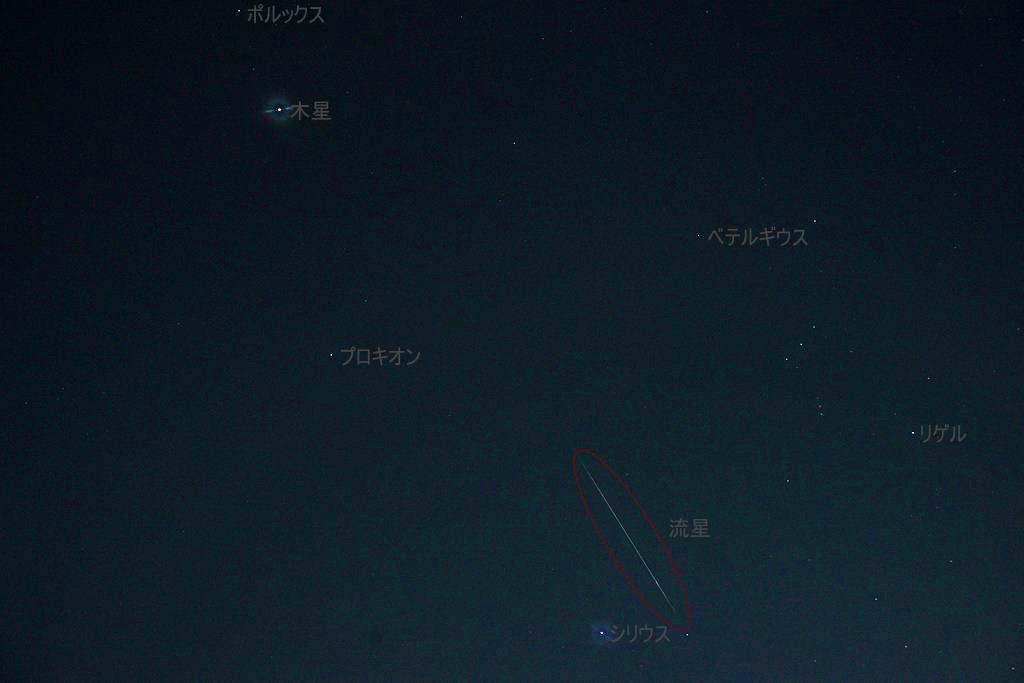
Due to dew on the camera lens, stars are not well captured, and halos appear around them.
(Taken at 0:25 on December 15, 20252. Clicking the image displays the meteor’s position and star names.)
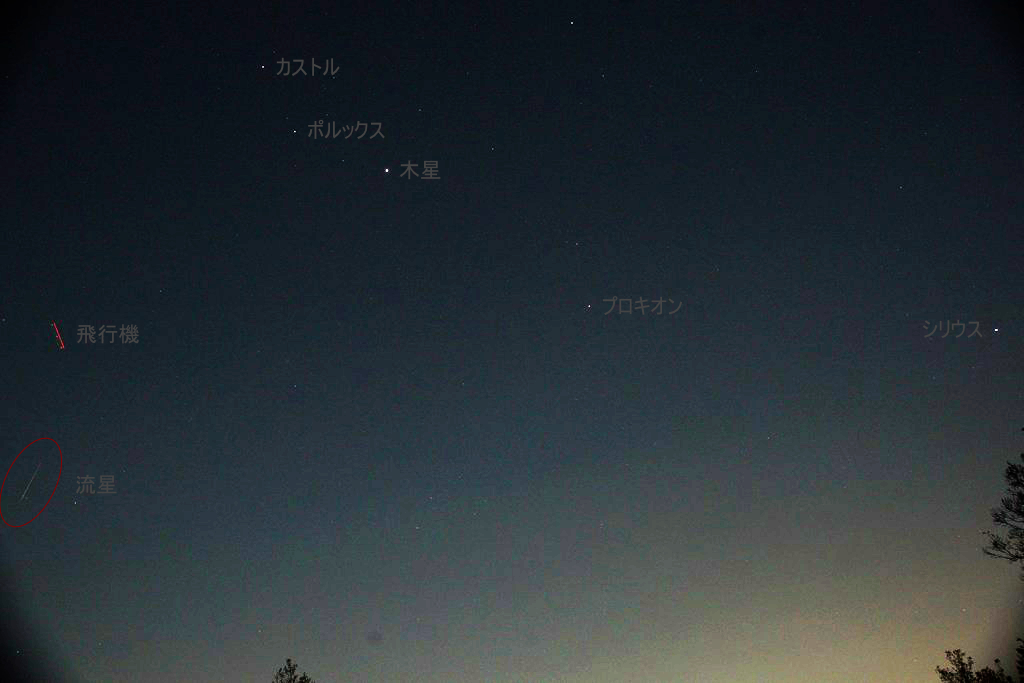
The object above the meteor is likely an airplane.
(Taken at 22:26 December 14, 20253. Clicking the image displays the meteor’s position and star names.)
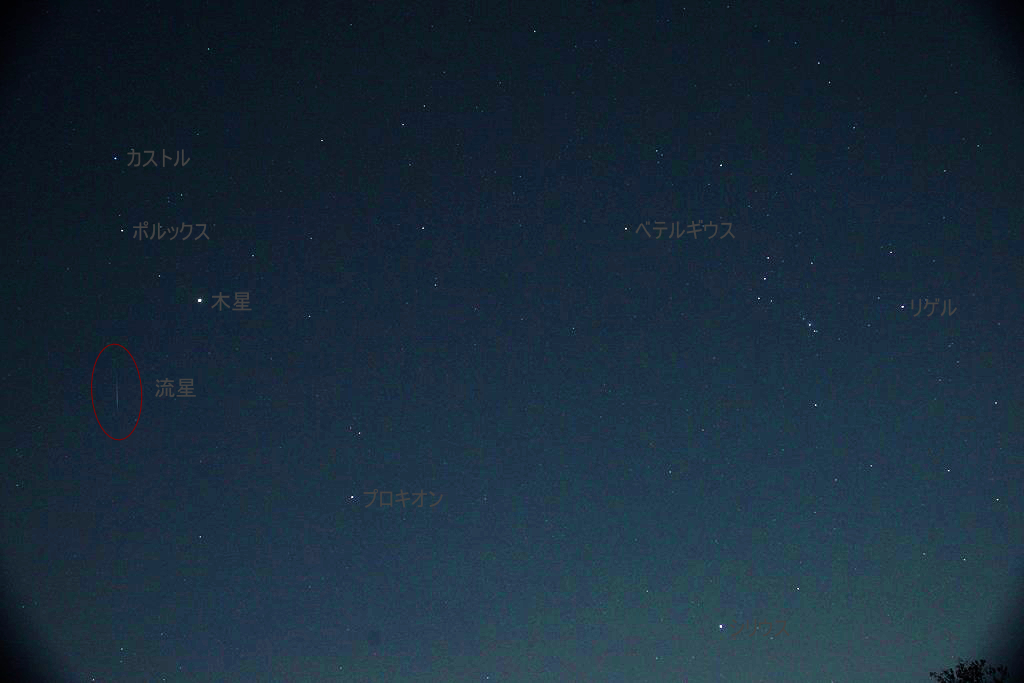
(Taken at 23:00 on December 14, 20254. Clicking the image displays the meteor’s position and star names.)
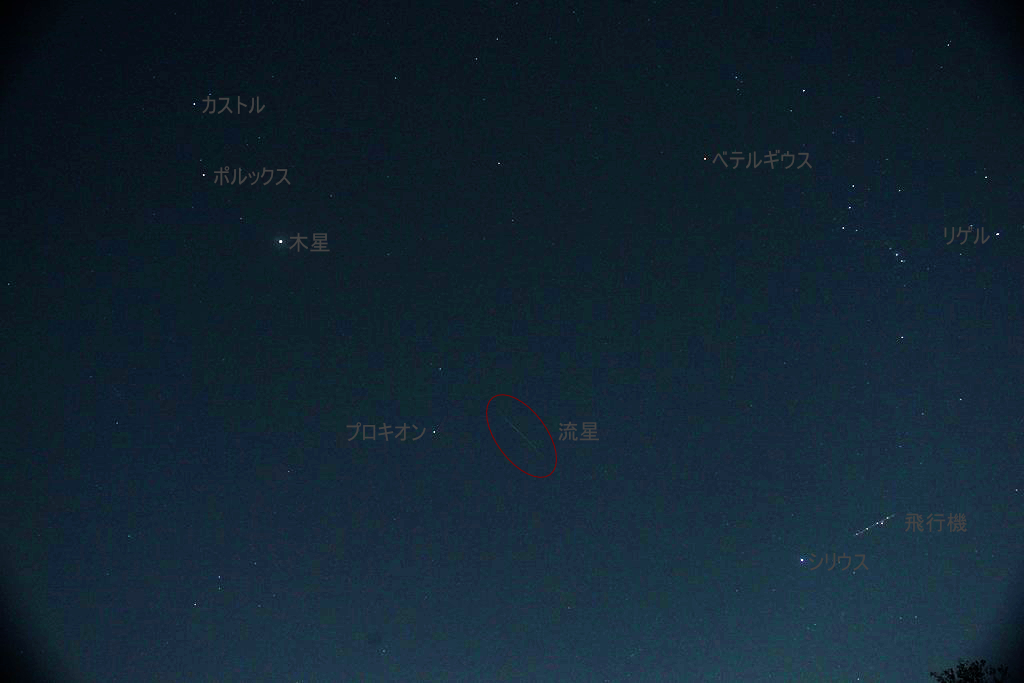
(Taken at 23:28 on December 14, 20255. Clicking the image displays the meteor’s position and star names.)
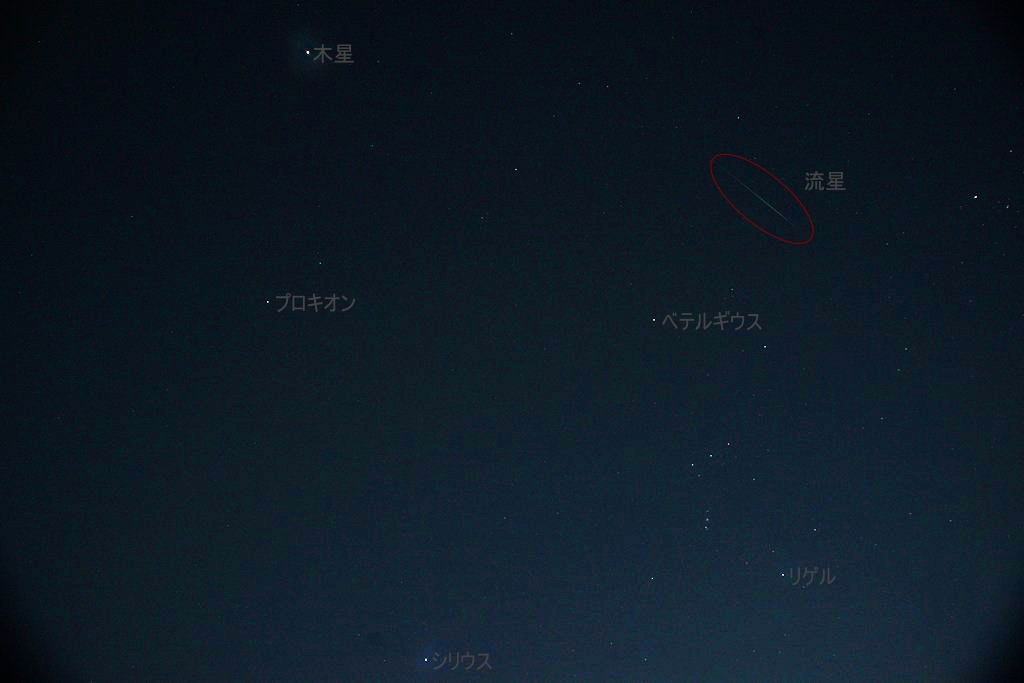
(Taken at 1:02 on December 15, 20256. Clicking the image displays the meteor’s position and star names.)
Overview
Situation of meteor shower
In urban areas, meteors aren’t usually very visible, but this time there were many bright ones, making it very enjoyable. Gyegyopon observed for six hours from 8 PM until 2 AM the next day and saw 32 meteors. Among them were 18 meteors brighter than a first-magnitude star.
Some meteors even showed color, and three of them were particularly beautiful with their blue hues.
Weather around peak
The night of December 13th to 14th saw poor weather nationwide, and Gyegyopon believes that very few areas in Japan were able to observe the Geminid meteor shower.
The night of the 14th to the 15th saw mostly cloudy skies over Hokkaido and the Sea of Japan side, though many areas also experienced clear skies.
Gyegyopon observed within Tokyo’s 23 wards on the night of the 14th. Since rain had continued until past noon, humidity seemed extremely high, causing condensation to form on the camera lens, which was quite troublesome7. Shining a flashlight upward revealed countless tiny water droplets suspended in the air. It felt like being inside a cloud.
Related Information
Basic Information
In the original photo meteors were too dark (faint), so I adjusted the brightness and contrast to make them easier to see.
Others
Related Articles
脚注
- For Windows users, I recommend changing the “Contrast Theme” in “Settings” under ‘Accessibility’ to something like “Night Sky”.
- Focal length 28mm, ISO 1600, Exposure 5 seconds, F3.5
- Focal length 28mm, ISO 1600, exposure 3.2 seconds, F3.5
- Focal length 28mm, ISO 1600, exposure 5 seconds, F3.5
- Focal length 28mm, ISO 1600, Exposure 5 seconds, F3.5
- Focal length 28mm, ISO 1600, Exposure 5 seconds, F3.5
- When condensation forms on the lens, the number of stars visible decreases, and the star images become blurred and spread out. Warming the lens removes the condensation, so I tried warming it with a heater and chemical hand warmers, but the lens remained free of condensation for only a short time.